Centrifugal blower - hot gas and plug build

High Temperature Plug Blower

Hot gas changes every assumption in a fan: the density you rated at, the steel you chose, the clearance you left and the oil you put in the bearing. This is the family we build when the gas is above what a standard blower tolerates.

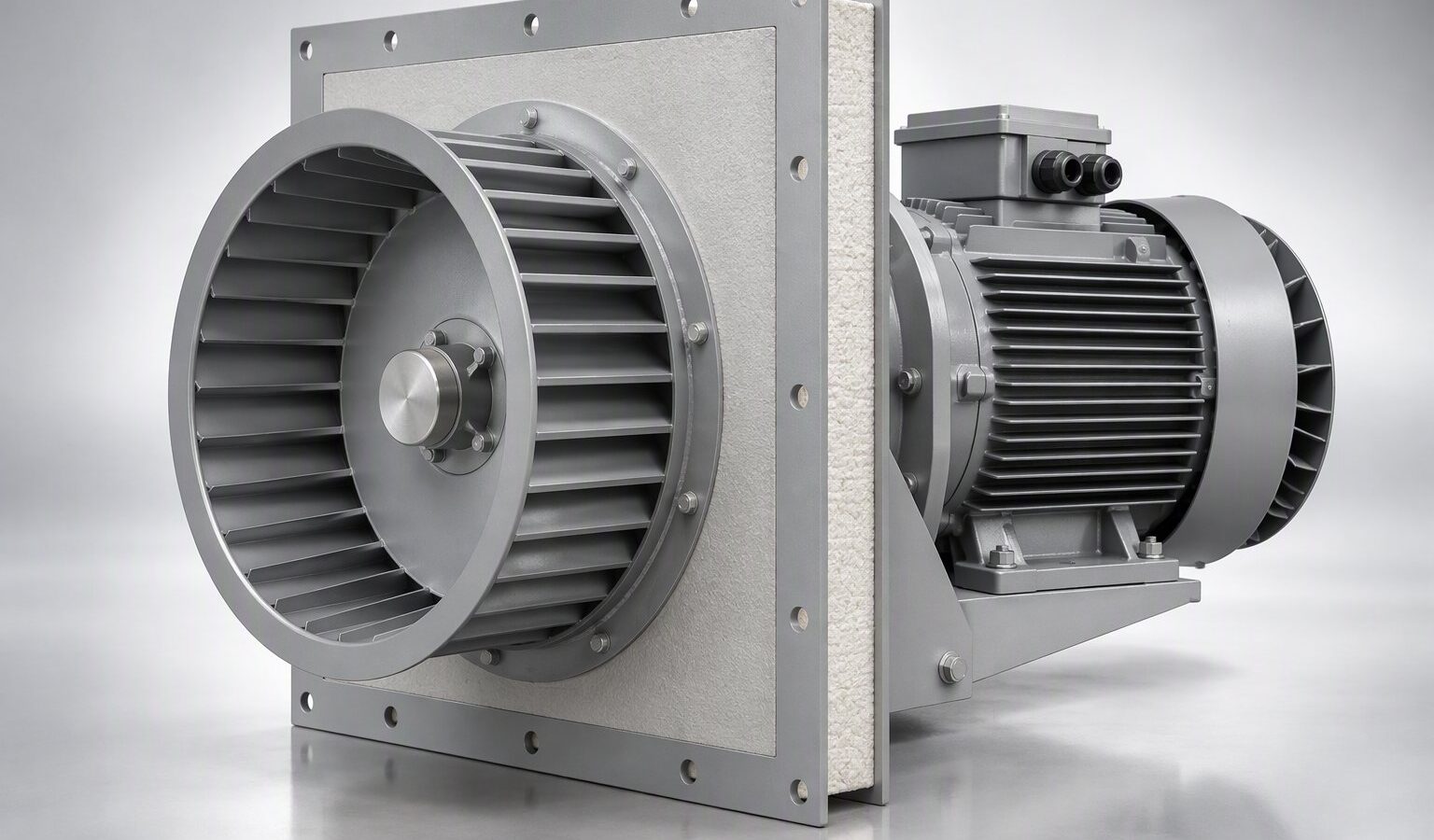
Illustrative 3D render of a high-temperature plug fan with a radial impeller, insulated casing panel and finned motor.

Illustrative 3D render of a representative high temperature build, not a photograph of a shipped unit.

  • Steel and non-ferrous process exhaust
  • Cement kiln and cooler auxiliary duty
  • Ceramics and glass lines
  • Industrial drying and curing
  • Heat recovery and waste gas transfer
  • Power plant auxiliary hot fans
  • Foundry cupola and fume extraction
Published envelopeHigh Temperature Plug Blower
  • Airflow100 to 15,000 CMH published; other sizes to the duty
  • Static pressure10 to 200 mmWC published; higher pressures by arrangement
  • DriverMotor sized at the hot duty, including the density correction
  • Gas temperatureTiers: to 150 C, 150-250, 250-350, 350-500, 500-650 C
  • Impeller / frameImpeller 250 to 2,200 mm (range-wide)
  • Speed300 to 4,500 RPM (range-wide)
  • Materials of constructionMild steel to 300-350 C, SS 304/304L, SS 321, SS 310, SS 316/316L and high temperature alloys by tier
  • ArrangementsArrangements 1/9 with 9 the common build; 4 and 8 where the shaft has to be pulled clear of the heat
  • Design standardsISO 9001:2015 works; ISO 1940-1 G6.3 balance with hot-clearance noted on the drawing
  • Test codeIS 4894 (BIS) run and performance test; ISO 5801 on request
  • Approx. weightOn the GA drawing
  • WheelBackward inclined or plug arrangement by tier; blade material follows temperature
  • ClearancesCold clearance set from calculated growth, recorded on the drawing
  • Bearing isolationExtended shaft, cooling fins, air slinger and purge where needed
  • InsulationCasing and inlet lagged on request
  • SealsGraphite and mica arrangements at high tiers; labyrinths elsewhere
  • LubeHigh temperature grease or forced oil, chosen by tier

Ranges are the family envelope our own product pages publish. The order always confirms against an approved GA drawing with the duty point, speed and absorbed power for your installation.

Selection logic

Heat is a design input, not a footnote

Our own product page for this family publishes two numbers side by side, and we keep doing it on purpose: the standard table shows 100 to 15,000 CMH at 10 to 200 mmWC and the tiered build goes to 650 C. The first is what the shop quotes most often, the second is what the machine is capable of once material grade, clearance and bearing isolation are all designed around the temperature. Anyone who gives you one number without the other is guessing.

Three things change when the gas gets hot. Density falls, so the fan has to spin faster to make the same actual pressure – and pressure and power both track density at constant flow. Steel grows, so a cold-set clearance becomes a hot-seized one. And the bearing, which is a grease-filled precision part that hates heat, has to be moved, cooled or fed.

Build

The temperature tiers we build to

To 150 C

Standard wheel, mild steel, high temperature grease, clearances nominal. Most dryer and process exhaust duty lands here.

150 to 350 C

Mild steel still works on the wheel to about 300-350 C; bearing pedestals move outboard, shaft is extended, seals upgrade.

350 to 500 C

Stainless SS 321 or SS 310 territory. Thermal growth is calculated part by part and cold clearances are recorded on the GA.

500 to 650 C

High temperature alloy selection, cooled or purged bearings, lagged casing, and a documented start-up sequence.

Materials by tier
Mild steel to roughly 300-350 C, then SS 304/304L, SS 321, SS 310, SS 316/316L or alloy by agreement
Arrangement
1/9 is the common build; 4 and 8 when the motor must be out of the heat
Balance
ISO 1940-1 G6.3, with hot-run check on large wheels
Test
IS 4894 run test; hot performance confirmed against the density basis on the order

Duty fit

Where it is the only answer

Kiln and cooler auxiliary fans, foundry and cupola fume, heat recovery transfer, curing and drying ovens, ceramics and glass, steel process off-gas. If the gas is above 200 C at the fan inlet, the standard centrifugal families stop being honest options and this tier table becomes the starting point.

Where the temperature is high and the dust is abrasive, the two failure modes stack: blade erosion accelerates and thermal growth closes the clearance. In that case we quote a plug arrangement – the wheel sits outside the hot, dirty stream and the gas is dragged through – and price the consumables up front.

Tell us the peak, not the average

A fan built for 450 C average and 620 C for twenty minutes a shift will be built wrong. Give us the profile and we design for it.

Range

Hot options compared

Compare the range on one sheet
ParameterHigh Temperature Plug BlowerBackward Inclined BlowerIndustrial Exhauster Radial Shrouded Blower
Airflow100 to 15,000 CMH published; other sizes to the duty1,300 to 3,85,000 CMH400 to 1,50,000 CMH
Static pressure10 to 200 mmWC published; higher pressures by arrangement6 to 152 mmWC (published as 0.25 to 6 inWC)100 to 2,000 mmWC
Gas temperatureTiers: to 150 C, 150-250, 250-350, 350-500, 500-650 CUp to 250 CUp to 200 C on this build; higher tiers by arrangement
Impeller / frameImpeller 250 to 2,200 mm (range-wide)Impeller 250 to 2,200 mm (range-wide)Impeller 250 to 2,200 mm (range-wide)

Blank cells mean the figure is not published for that family — ask us and we will confirm it against your duty.

Questions

High temperature blower - questions

Why do your own pages show both 150 C and 650 C?

Because they answer different questions. The standard table is the envelope we quote repeatedly without a special build. 650 C is the tiered capability once materials, clearances and bearing isolation are engineered for the temperature. We would rather show both than pick one.

Do you cool the bearings with water?

Sometimes. Air cooling, extended shafts, purged seals and outboard pedestals come first because they do not put a water line next to a hot gas duct. Water-cooled components are a project decision, made on the drawing, not a default.

Can a hot fan also be an ID fan on a boiler?

Yes, on the right tier and with the dust load understood. For boiler induced draft with heavy fly ash we usually pair the temperature tier with a radial or shrouded exhauster wheel and treat the casing liners as spares.

What we need to quote this type

  • Gas temperature at the fan, continuous and peak
  • Gas composition and any condensation risk
  • Airflow and pressure at hot conditions, and at cold if the plant starts cold
  • Dust load and abrasiveness
  • Whether the fan sees the gas first or after a filter
  • Intermittent or continuous running - thermal cycling is a design input

Check the duty point first

Airflow and pressure are always quoted at the actual gas density. Altitude, temperature and duct losses move the number — run it through the worksheet before you send it.

Open the sizing calculator

Other types in this range

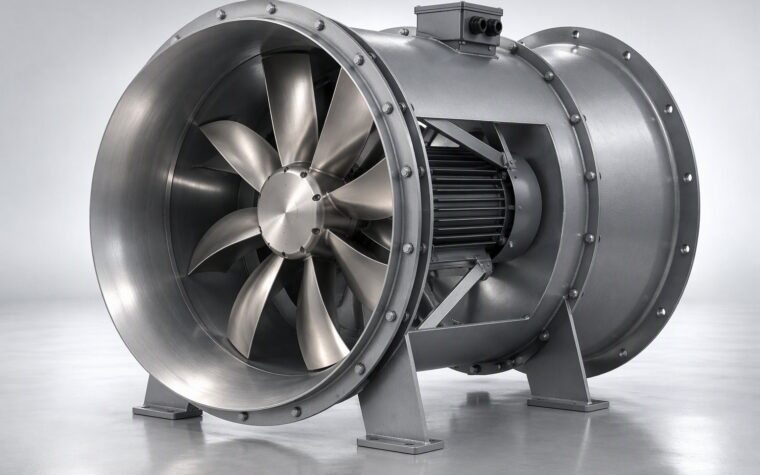
Axial Flow Fan

Straight-through air at low pressure: tube axial, vane axial and propeller builds in mild steel and aluminium.

AirflowDuty specific - confirm the operating point with us
Static pressureLow pressure service, below about 50 mmWC; above that we go centrifugal
See the build sheet

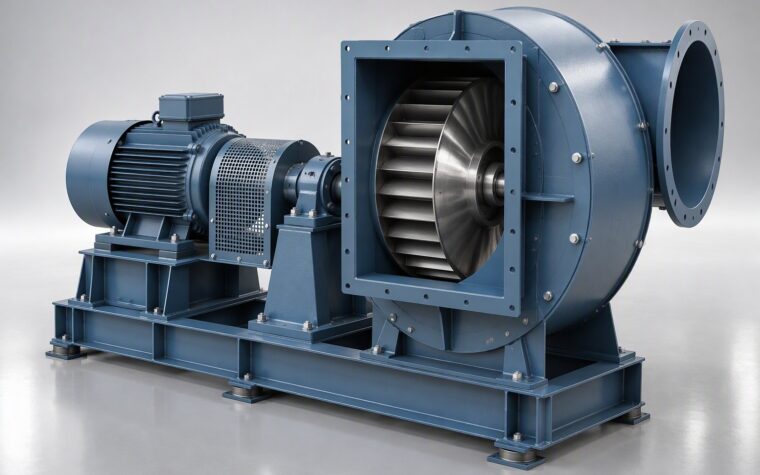
Backward Curved Blower

High static efficiency, non-overloading power curve. The default wheel for clean and lightly loaded air at medium to high pressure.

Airflow14,000 to 7,50,000 CMH
Static pressure40 to 2,000 mmWC

See the build sheet

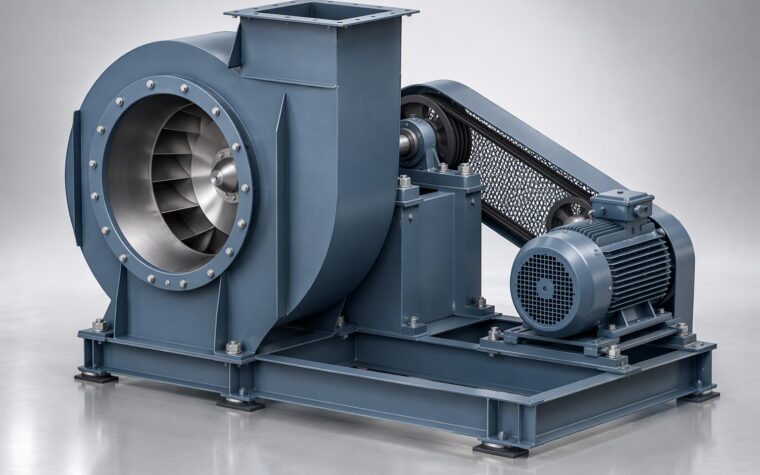
Backward Inclined Blower

Flat plates set at an angle: robust, tolerant of moderate dust, still efficient and still non-overloading.

Airflow1,300 to 3,85,000 CMH
Static pressure6 to 152 mmWC (published as 0.25 to 6 inWC)

See the build sheet

Enquiry

Send the hot gas duty

Tell us the duty and the constraints. You get a selection, a build sheet and a price from the works — not a call centre.

High Temperature Plug Blower enquiry

Airflow, static pressure and gas temperature are enough to start. Add a drawing if you have one.

No drawing? The nameplate or a photo of the installation is enough to start.

Urgent? (+91) 990 903 3851

Sent from /blowers/high-temperature-plug-blower/. Submissions are stored in WordPress and emailed to our estimation desk.

Call the works Enquire