Custom build - make to order

Make-To-Order Blower

Every fan on this page started as a drawing. This is the route for the duties that do not sit in a catalogue slot: unusual gas, unusual space, unusual material, or an existing foundation that has to be reused.

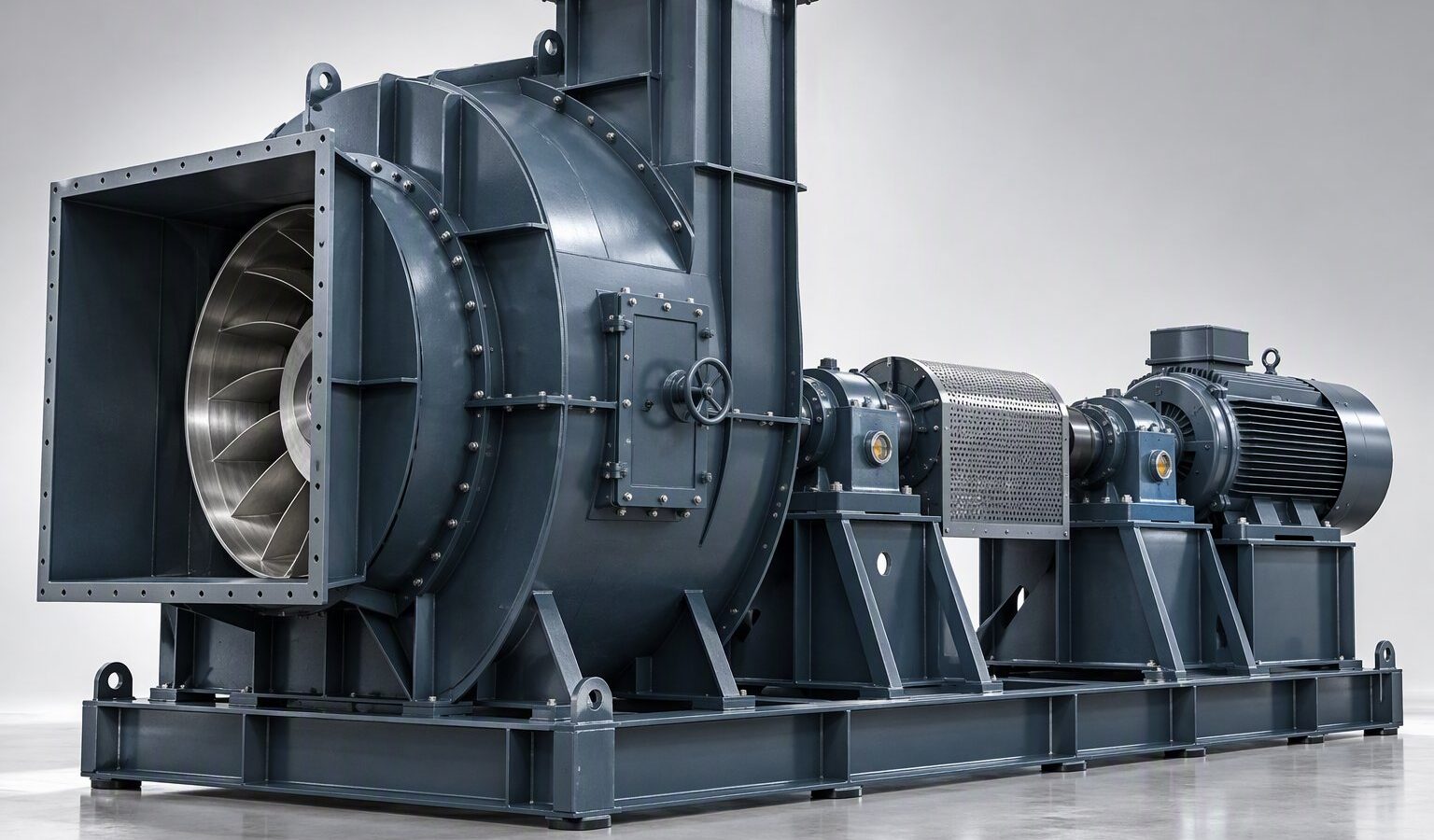
Illustrative 3D render of a large custom centrifugal exhauster with a fabricated split casing and a heavy skid-mounted drive.

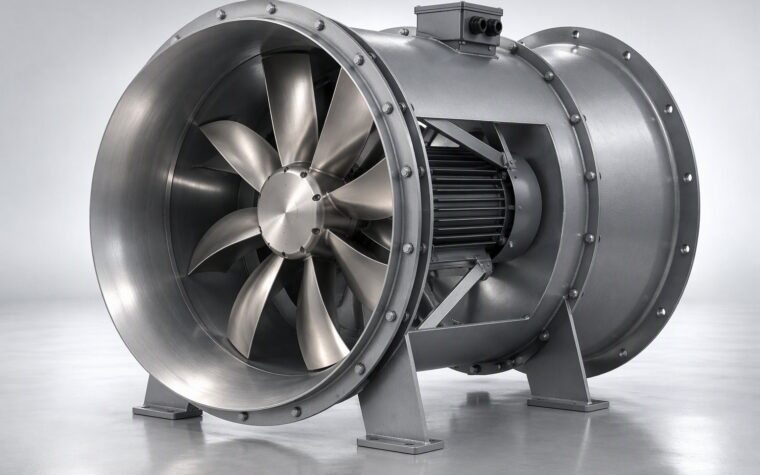
Illustrative 3D render of a representative custom build; geometry follows the approved GA drawing for your order.

  • Replacement fans on a fixed foundation
  • Process changes that moved the duty point
  • Corrosive or contaminated gas requiring exotic material
  • High temperature duty beyond the standard families
  • Export orders to a client's own engineering standard
  • Noise-limited sites needing a slower, larger wheel
  • Capacity increases on an existing duct line
Published envelopeMake-To-Order Blower
  • Airflow100 to 2,00,000 m3/hr published capability; higher volumes by design
  • Static pressure25 to 1,900 mmWC, up to 2,000 mmWC
  • Driver0.25 HP to 475 HP published; above 500 HP available
  • Gas temperatureAmbient to 650 C
  • Impeller / frameImpeller 300 to 2,000 mm
  • Speed300 to 4,000 RPM
  • Materials of constructionMS, SS-304, SS-316, SS-316L, SS-202, SS-410, EN-8, Duplex SS-2205, HSLA, FRP, titanium, wear alloys
  • ArrangementsAny arrangement in the range, plus base modification to an existing footprint
  • Design standardsISO 9001:2015 works; ISO 1940-1 G6.3 and G2.5 balance
  • Test codeIS 4894 (BIS) duct test; ISO 5801 / ANSI-AMCA 210 certified rating where the project requires it
  • Approx. weightPer the approved GA drawing
  • SequenceDuty review, selection, GA drawing, your approval, manufacture, test, dispatch
  • DrawingDimensions, connection, rotation, foundation, absorbed power, weight, centre of gravity
  • QAMaterial test certificates, positive material identification, balance certificate, run and performance test
  • Lead time5 to 7 weeks for standard-scope builds; 8 to 12 weeks where material or size requires it
  • Change controlRevisions after drawing approval are priced, not absorbed silently
  • ExportPacking, despatch marking and documentation to the destination requirement

Ranges are the family envelope our own product pages publish. The order always confirms against an approved GA drawing with the duty point, speed and absorbed power for your installation.

How it works

A drawing before a quotation, not after

Make-to-order is not a polite way of saying “we will try”. It is a sequence. Duty review, selection, general arrangement drawing, your approval, manufacture, test, dispatch. The published capability for this route is 100 m3/hr to 2,00,000 m3/hr, 25 to 1,900 mmWC with 2,000 mmWC reachable, impellers from 300 to 2,000 mm, speeds 300 to 4,000 RPM, motors from 0.25 HP to 475 HP with above 500 HP available, and gas from ambient to 650 C.

That last number matters more than the rest, because the moment a duty leaves the standard families the conversation becomes about material, growth, bearing isolation and testing – and those are all decided on paper before the plate is cut.

1. Duty review

We restate your numbers back to you at the actual gas density. If they do not survive the correction, that is the first thing we tell you.

2. Selection

Two or three options with absorbed power, tip speed and a wear statement – including the catalogue fan if it genuinely fits.

3. GA approval

Dimensions, rotation, foundation loads, weight, centre of gravity, absorbed power. You sign this before metal is cut.

4. Build and test

Material certificates, balance, run and performance test to IS 4894, then packing and despatch documentation.

When to use it

The five real reasons

Fixed foundation
A replacement that has to bolt to existing holes and reuse the existing motor and belts
Moved duty
Process changed, filter blinded, capacity raised – the old fan is now the wrong fan
Hostile gas
Chlorides, fluorides, acid carryover, or a temperature that ends mild steel as an option
Noise limit
A slower, larger wheel and a lower tip speed; the fifth-power noise law is the only way to buy silence
Someone else standard
An owner or EPC specification that dictates test, documentation and material grades

Delivery

Lead time, stated before you commit

Our published lead times for this route are 5 to 7 weeks for standard-scope builds and 8 to 12 weeks where material grade, impeller size or documentation load requires it. The number on your order confirmation is the one we plan against; shutdown windows and despatch milestones are put on the same sheet.

Range

Compare the standard families first

Compare the range on one sheet
ParameterMake-To-Order BlowerBackward Curved BlowerHigh Temperature Plug Blower
Airflow100 to 2,00,000 m3/hr published capability; higher volumes by design14,000 to 7,50,000 CMH100 to 15,000 CMH published; other sizes to the duty
Static pressure25 to 1,900 mmWC, up to 2,000 mmWC40 to 2,000 mmWC10 to 200 mmWC published; higher pressures by arrangement
Gas temperatureAmbient to 650 CUp to 200 CTiers: to 150 C, 150-250, 250-350, 350-500, 500-650 C
Impeller / frameImpeller 300 to 2,000 mmImpeller 250 to 2,200 mm (range-wide)Impeller 250 to 2,200 mm (range-wide)

Blank cells mean the figure is not published for that family — ask us and we will confirm it against your duty.

Questions

Make-to-order - questions

What is the minimum enquiry you can work from?

Flow, pressure and gas temperature. If those three exist and the density basis is normal, we can select. Everything else – arrangement, material, documentation – is a conversation we can have on a call.

Do you have drawings of the last job?

No. Client GA drawings are their property. We can show you representative geometry, published envelope figures and the test and documentation set we issue.

Can you build to AMCA or ISO certified performance?

IS 4894 is the standard test basis for our centrifugal fans. Where a project requires a certified laboratory rating to ISO 5801 or ANSI-AMCA 210, that is scoped and priced as a test programme, not assumed.

Can you import or export?

Export orders with packing, marking and documentation to destination requirements are part of the published scope. Talk to the desk early – material certification and test sequencing change the lead time.

What we need to quote this type

  • Duty point: flow, pressure, temperature, gas composition
  • The reason a catalogue fan does not fit - that tells us where to spend the money
  • Space, foundation and existing duct constraints
  • Material or wear requirement
  • Test and documentation level required
  • Target delivery and shutdown window

Check the duty point first

Airflow and pressure are always quoted at the actual gas density. Altitude, temperature and duct losses move the number — run it through the worksheet before you send it.

Open the sizing calculator

Other types in this range

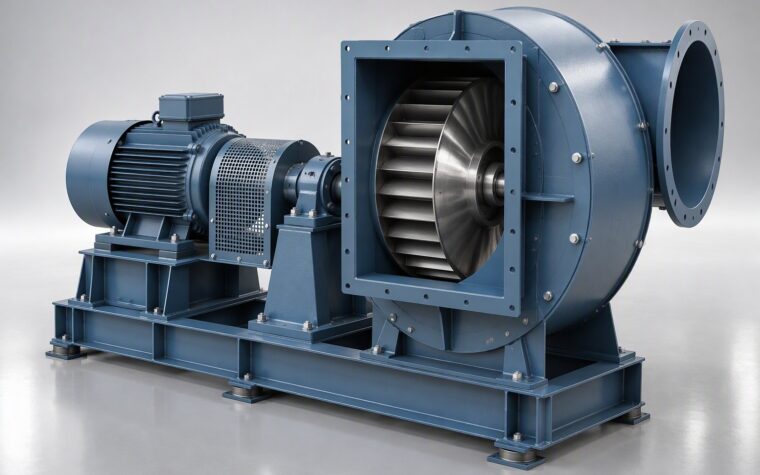
Axial Flow Fan

Straight-through air at low pressure: tube axial, vane axial and propeller builds in mild steel and aluminium.

AirflowDuty specific - confirm the operating point with us
Static pressureLow pressure service, below about 50 mmWC; above that we go centrifugal
See the build sheet

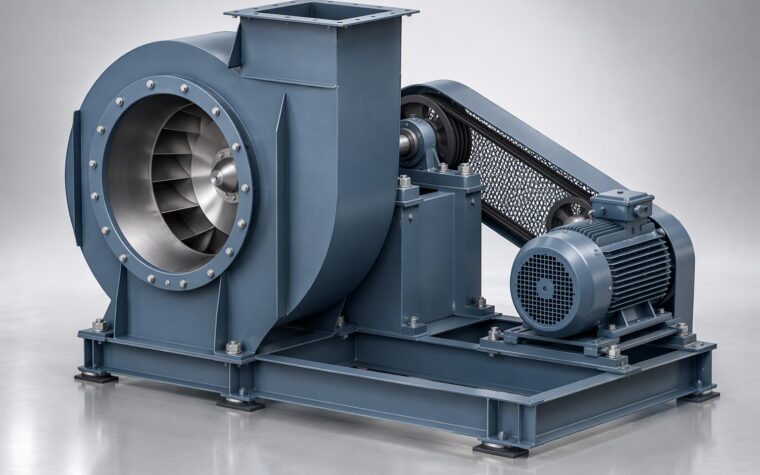
Backward Curved Blower

High static efficiency, non-overloading power curve. The default wheel for clean and lightly loaded air at medium to high pressure.

Airflow14,000 to 7,50,000 CMH
Static pressure40 to 2,000 mmWC

See the build sheet

Backward Inclined Blower

Flat plates set at an angle: robust, tolerant of moderate dust, still efficient and still non-overloading.

Airflow1,300 to 3,85,000 CMH
Static pressure6 to 152 mmWC (published as 0.25 to 6 inWC)

See the build sheet

Enquiry

Start a make-to-order enquiry

Tell us the duty and the constraints. You get a selection, a build sheet and a price from the works — not a call centre.

Make-To-Order Blower enquiry

Airflow, static pressure and gas temperature are enough to start. Add a drawing if you have one.

No drawing? The nameplate or a photo of the installation is enough to start.

Urgent? (+91) 990 903 3851

Sent from /blowers/make-to-order-blower/. Submissions are stored in WordPress and emailed to our estimation desk.

Call the works Enquire