Centrifugal exhauster - radial shrouded

Industrial Exhauster Radial Shrouded Blower

The last fan before the dust wins. Shrouded radial blades, wear-lined casing and a build that assumes the gas is dirty, because on this duty it is.

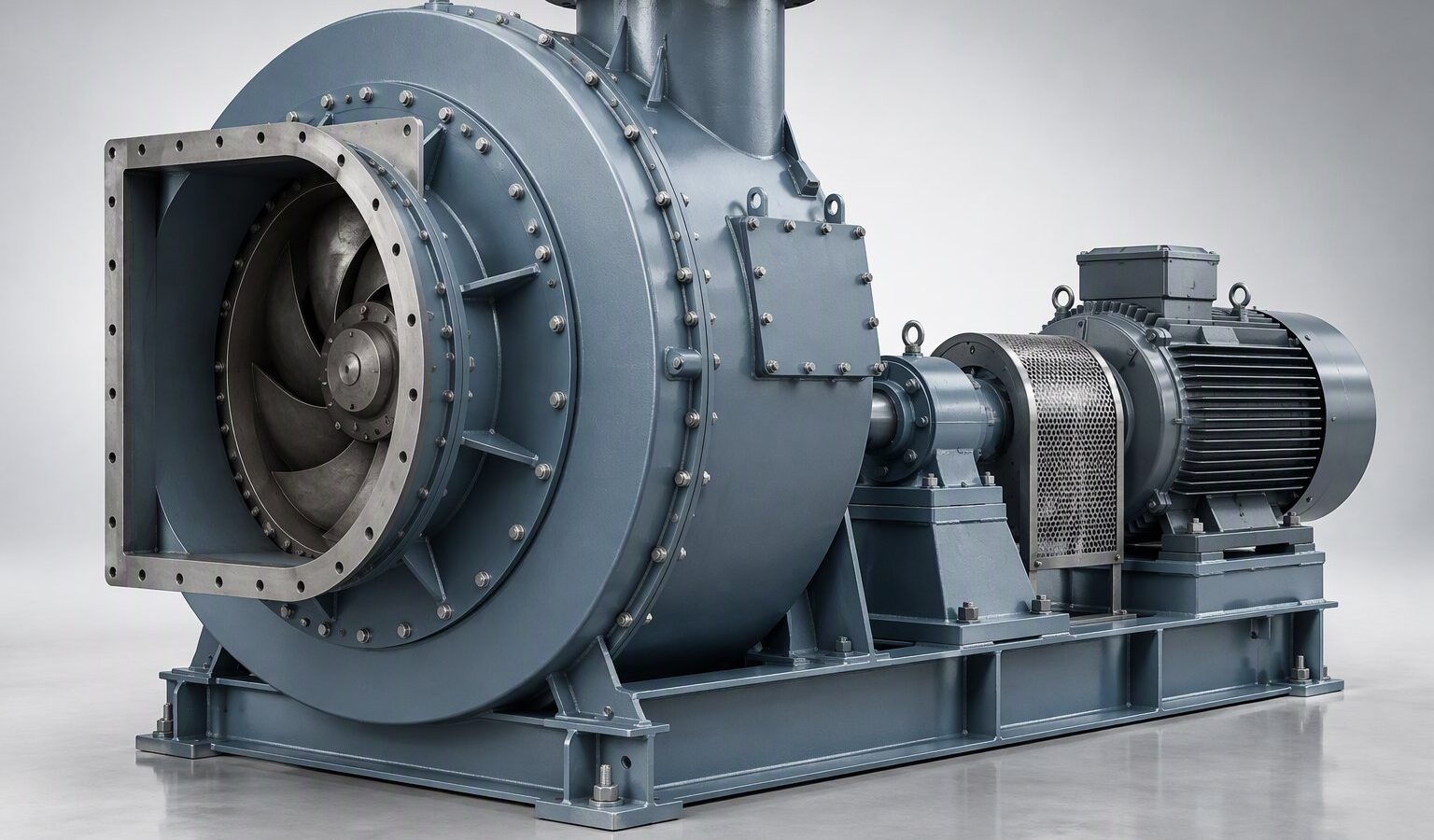
Illustrative 3D render of a wear-lined radial shrouded exhauster with a bolted split casing, inspection door and heavy bearing housings.

Illustrative 3D render of a representative shrouded radial exhauster build, not a photograph of a shipped unit.

  • Power generation coal, ash and flue duty
  • Steel and non-ferrous metal process exhaust
  • Manufacturing plants and workshops
  • Railways and infrastructure tunnel and shed extraction
  • Food and beverage dust and steam extraction
  • General industrial buildings
  • Utility and auxiliary exhaust fans
Published envelopeIndustrial Exhauster Radial Shrouded Blower
  • Airflow400 to 1,50,000 CMH
  • Static pressure100 to 2,000 mmWC
  • DriverMotor sized across the whole curve; radial wheels overload, so the worst case is quoted
  • Gas temperatureUp to 200 C on this build; higher tiers by arrangement
  • Impeller / frameImpeller 250 to 2,200 mm (range-wide)
  • Speed300 to 4,500 RPM (range-wide)
  • Materials of constructionMild steel, SA516 Gr.70, stainless grades, SS 410, hard-facing and replaceable wear liners
  • ArrangementsArrangements 1 to 9, belt drive preferred for trim and isolation
  • Design standardsISO 9001:2015 works; ISO 1940-1 G6.3, G2.5 at high speed
  • Test codeIS 4894 (BIS) performance and run test; ISO 5801 on request
  • Approx. weightOn the GA drawing
  • WheelRadial blades with shroud, pocket or plate build, hard-faced at the wear zones
  • CasingWear-lined at cutwater and housing, bolted liners for replacement
  • InletWear ring as consumable; heavy cone sized for the dust load
  • ShaftOversized for dirty duty with critical speed margin verified
  • BearingsHeavy pedestal units, grease path outside the air stream
  • SparesWe quote a recommended wear-part list with every machine

Ranges are the family envelope our own product pages publish. The order always confirms against an approved GA drawing with the duty point, speed and absorbed power for your installation.

Selection logic

A fan planned around its own wear

Radial blades with a shroud are the simplest heavy-duty wheel there is and the one that survives being fed real dirt. Straight blades, a cover plate over them, and a casing lined where the dust actually hits. Published envelope: 400 to 1,50,000 CMH at 100 to 2,000 mmWC, gas to 200 C on this build.

The design difference from a blower is the assumption of failure. Liners are bolted, not welded solid, so they come off. The inlet ring is a part number, not a repair. The blade tips are hard-faced where the measurement says they will wear, and the wear-part list is delivered with the GA drawing so stores can raise spares before the machine is needed.

Rebuild in the field

A shrouded radial wheel can be pulled, inspected, re-tipped and put back inside one shutdown. That is usually the real requirement: not maximum efficiency, but the shortest unplanned stoppage.

Build

Construction

Blades
Straight radial with shroud; pocket construction for the heaviest loads
Wear protection
Hard-facing at blade tips, bolted liners at cutwater and housing, replaceable inlet ring
Casing
Heavy plate, reinforced, with clean-out doors and drain; designed for lifting
Sealing
Packing gland, labyrinth or mechanical on request; spin-off pockets where dust tries to reach the shaft
Balance
ISO 1940-1 G6.3, G2.5 on high speed wheels – a heavy wheel out of balance destroys its own bearings
Drive
Belt preferred: it keeps the motor out of the dust and lets the plant trim speed

Duty fit

Dirty, hot, or both

Coal and ash handling in power generation, steel and metal process exhaust, cement kiln and cooler duty, workshop and building extraction, railway shed and tunnel extraction, food and beverage dust and steam hoods. If the fan is downstream of a cyclone rather than upstream of a filter, this is the family.

Temperature above 200 C is where we stop and think: the same wheel with the hot-gas tier build (materials, clearance, bearing isolation) is usually the right answer rather than a different fan. Tell us both numbers – temperature and dust – and we will not guess between them for you.

Dust data that changes the quotation

  • Load in kg per hour and g per cubic metre
  • Particle size distribution
  • Mohs hardness or material name
  • Bulk density and moisture
  • Whether the fan is before or after the arrester

Range

Two ways to spell exhauster

Compare the range on one sheet
ParameterIndustrial Exhauster Radial Shrouded BlowerIndustrial Exhauster Air Handling BlowerHigh Pressure Radial Blade Blower
Airflow400 to 1,50,000 CMH1,750 to 2,30,000 CMH400 to 1,50,000 CMH
Static pressure100 to 2,000 mmWC25 to 406 mmWC (published as 1 to 16 inWC)100 to 2,000 mmWC
Gas temperatureUp to 200 C on this build; higher tiers by arrangementUp to 200 CUp to 200 C
Impeller / frameImpeller 250 to 2,200 mm (range-wide)Impeller 250 to 2,200 mm (range-wide)Impeller 250 to 2,200 mm (range-wide)

Blank cells mean the figure is not published for that family — ask us and we will confirm it against your duty.

Questions

Radial shrouded exhauster - questions

Shrouded or open radial?

Shrouded when there is dust to carry and wear to manage: the cover plate holds the blade root and stiffens the wheel. Open pockets go on the heaviest solids duty and on some conveying applications where plugging has to be possible.

How long will it last?

Honest answer: it depends on your dust. We will tell you which parts we expect to replace first and quote them as spares, rather than promise a life we cannot control.

Can you retrofit an existing exhauster?

Yes. Send the drawing or let us survey. Common scope is a new lined wheel in the existing casing, upgraded bearings, and a hard-facing spec on the wear zones – which buys back most of the original performance at a fraction of a new machine.

What we need to quote this type

  • Airflow and static pressure at the fan
  • Dust load in kg per hour and g per cubic metre
  • Particle size, hardness and shape
  • Gas temperature and moisture; condensation risk
  • Continuous or intermittent running
  • Existing fan drawing or nameplate, for a retrofit

Check the duty point first

Airflow and pressure are always quoted at the actual gas density. Altitude, temperature and duct losses move the number — run it through the worksheet before you send it.

Open the sizing calculator

Other types in this range

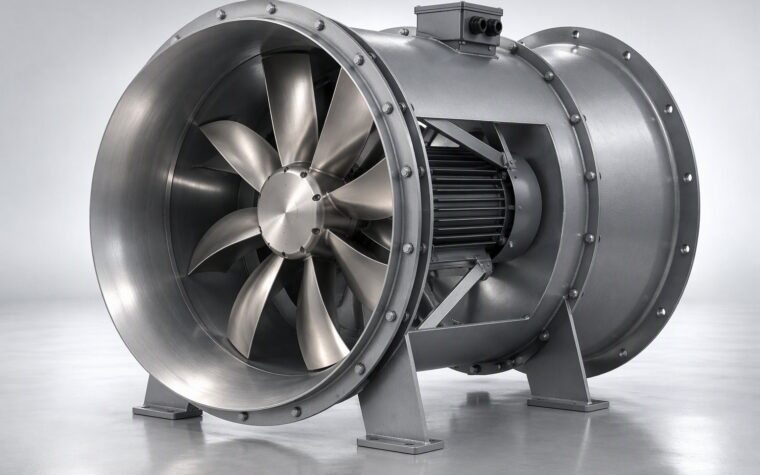
Axial Flow Fan

Straight-through air at low pressure: tube axial, vane axial and propeller builds in mild steel and aluminium.

AirflowDuty specific - confirm the operating point with us
Static pressureLow pressure service, below about 50 mmWC; above that we go centrifugal
See the build sheet

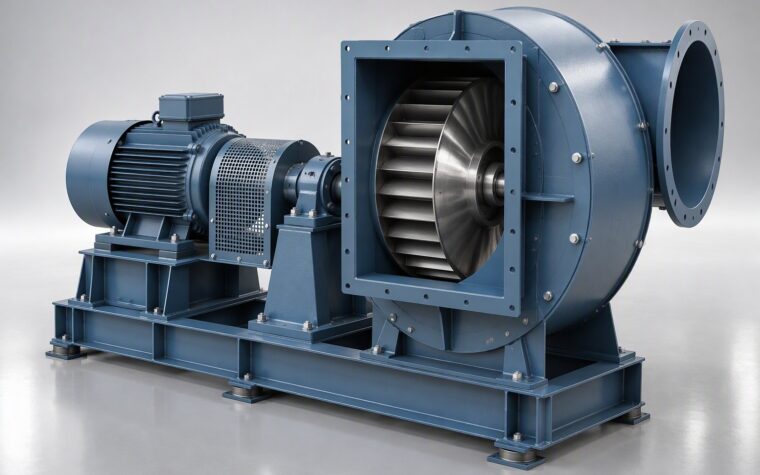
Backward Curved Blower

High static efficiency, non-overloading power curve. The default wheel for clean and lightly loaded air at medium to high pressure.

Airflow14,000 to 7,50,000 CMH
Static pressure40 to 2,000 mmWC

See the build sheet

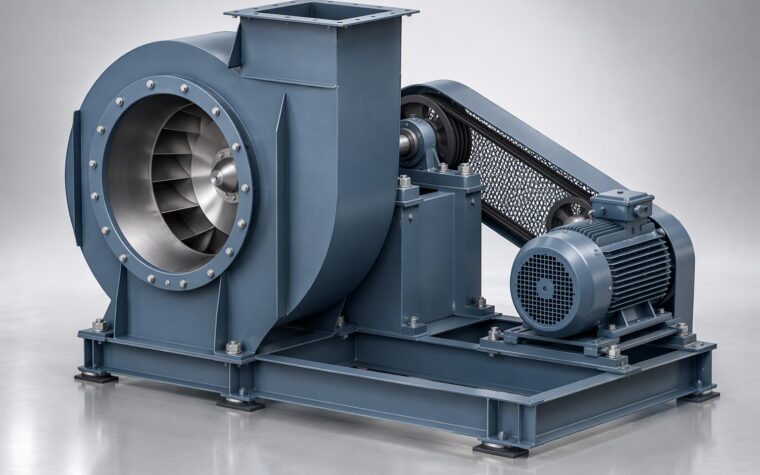
Backward Inclined Blower

Flat plates set at an angle: robust, tolerant of moderate dust, still efficient and still non-overloading.

Airflow1,300 to 3,85,000 CMH
Static pressure6 to 152 mmWC (published as 0.25 to 6 inWC)

See the build sheet

Enquiry

Send the exhaust duty

Tell us the duty and the constraints. You get a selection, a build sheet and a price from the works — not a call centre.

Industrial Exhauster Radial Shrouded Blower enquiry

Airflow, static pressure and gas temperature are enough to start. Add a drawing if you have one.

No drawing? The nameplate or a photo of the installation is enough to start.

Urgent? (+91) 990 903 3851

Sent from /blowers/radial-shrouded-exhauster/. Submissions are stored in WordPress and emailed to our estimation desk.

Call the works Enquire